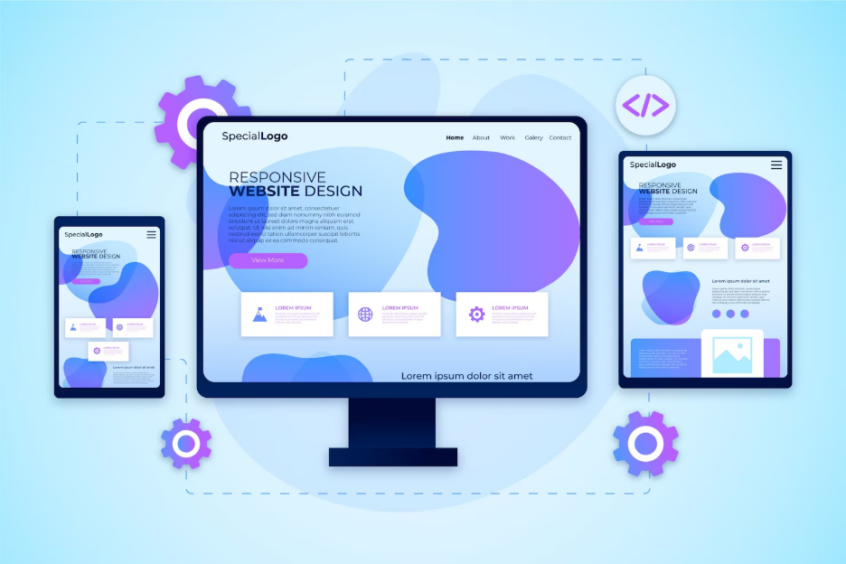
Responsive web design importance is more crucial than ever in today’s digital landscape, where your website is often the very first touchpoint customers have with your business. A responsive site ensures seamless browsing across desktops, laptops, tablets, and smartphones keeping users engaged, reducing friction, and helping businesses convert more visitors into loyal customers. At 8 Waves Creative, we’ve seen how businesses experience stronger engagement simply by adopting a modern, responsive website.
What Is Responsive to Web Design?
Responsive web design is an approach to building websites that automatically adjust and adapt to different screen sizes and devices. Whether someone visits your site from a mobile phone, a laptop, or a large desktop monitor, your layout, text, and images rearrange themselves fluidly.
A responsive website uses:
- Fluid grids
- Flexible images
- Dynamic CSS media queries
This ensures readability, navigability, and consistent user experience across all devices without the need for separate mobile versions of your site.
Why Responsive Design Matters
Modern users expect websites to load fast, look clean, and function without issues. With more than 60% of web traffic now coming from mobile devices, a non-responsive website risks losing a massive portion of potential customers.
A responsive site is critical because:
- Customers judge credibility based on appearance and usability
- Mobile-first indexing affects SEO rankings
- User satisfaction directly influences conversion rates
- Businesses save time and cost by managing a single site
By embracing responsive design, brands provide a smooth and engaging digital experience that keeps customers interested.
Key Benefits of a Responsive Website
Improved User Experience (UX Across All Devices)
User experience lies at the heart of any successful digital strategy. Responsive websites deliver a frictionless journey with clean layout, readable text, easy navigation, and fast-loading pages.
When customers can browse effortlessly, they spend more time engaging with your content, exploring your services, and eventually acting. At 8 Waves Creative, we ensure every responsive site we create is designed with user behavior, device compatibility, and visual clarity in mind.
Better SEO Rankings with Mobile-Friendly Design
Google uses mobile-first indexing, which means it primarily evaluates the mobile version of your site ranking. If your website isn’t mobile-friendly, it risks losing visibility—no matter how strong your content may be.
Responsive design boosts SEO by:
- Improving page load speed
- Reducing bounce rates
- Enhancing mobile usability
- Supporting Google’s ranking guidelines
This allows businesses to appear higher in search results and attract more organic traffic.
Higher Conversion Rates
Conversion is directly tied to ease of use. A responsive site removes barriers such as zooming, horizontal scrolling, slow load times, and distorted visuals.
When users can navigate your website smoothly, they’re more likely to:
- Fill out forms
- Contact your business
- Purchase a product
- Book a service
Responsiveness builds trust and trust drives action.
Cost-Effective Website Management
Before responsive design became standard, many businesses built separate websites for desktop and mobile. This meant double the effort, double the cost, and double the maintenance. Responsive web design simplifies everything with one unified website that works everywhere. Updates become faster, management becomes cheaper, and consistency becomes easier to maintain. If you’re looking to streamline your website management and upgrade to a modern, responsive layout, explore our professional web design services.
Mobile-Friendly Website Benefits for Businesses
A mobile-friendly website doesn’t just look good; it supports business growth in multiple ways.
Key advantages include:
- Wider reach: Catering to mobile users increases traffic potential.
- Improved customer retention: Smooth mobile experiences keep users coming back.
- Faster loading times: Mobile optimization improves performance.
- Professional brand perception: A modern responsive site that enhances credibility.
At 8 Waves Creative, we often audit websites that lose customers simply because they’re hard to use on mobile. Once redesigned responsively, customer engagement and session duration often increase significantly.
How Responsive Design Enhances Customer Engagement
Customer engagement depends on how effectively your website interacts with users, and responsive design plays a major role. To further strengthen engagement and guide users through a more strategic digital journey, you can also benefit from a well-structured strategic marketing plan.
Here’s how responsive design boosts engagement:
- Consistent experience: No matter the device, users enjoy the same smooth journey.
- Reduced frustration: Clear menus, readable text, and fast load times keep users satisfied.
- Stronger storytelling: Visual and content elements adjust gracefully to different screens.
- Better-performing interactions: Buttons, forms, sliders, and animations scale properly across all devices.
A responsive website encourages users to stay longer, explore deeper, and interact more frequently with your content.
Essential Elements of Strong Responsive UX Design
For responsiveness to positively impact customer engagement, certain elements must be implemented correctly.
Flexible Layouts & Grids
Flexible grids allow website elements to stretch, shrink, and rearrange based on screen size. This avoids awkward spacing, broken designs, or overlapping elements.
A well-structured grid system ensures:
- Smooth transitions between devices
- Clean and organized content placement
- Better readability
Scalable Images & Typography
Images and text must scale proportionally to maintain aesthetics and legibility.
Key best practices include:
- Using responsive image attributes
- Setting font sizes in relative units
- Ensuring clarity on both large and small screens
At 8 Waves Creative, we ensure all visual elements scale properly without losing quality.
Touch-Friendly Buttons & Menus
On mobile devices, users interact with their fingers—not a cursor. This makes touch-friendly navigation essential.
Elements must be:
- Large enough to tap easily
- Spaced out to prevent accidental clicks
- Designed with intuitive placement
This dramatically improves engagement and reduces frustration.
Cross-Device Web Design – Why It Matters
Customers today switch between devices throughout the day. They may start browsing on a smartphone, research more on a tablet, and complete a purchase on a desktop.
Cross-device design ensures:
- A seamless journey across all touchpoints
- Consistent branding
- Smooth navigation and identical functionality
- Continuity in the customer decision-making process
Businesses that ignore cross-device behavior risk losing customers simply due to inconsistent experiences.
How to Check If Your Website Is Truly Responsive
To determine whether your website is genuinely responsive, follow these steps:
- Use Google’s Mobile-Friendly Test
This tool shows whether your site meets mobile-responsive standards.
- Resize Your Browser Window
Watch how your layout behaves when scaling the browser. A responsive website adjusts fluidly.
- Check Responsiveness on Multiple Devices
Test your site on:
- Smartphones
- Tablets
- Laptops
- Desktops
- Verify Image Scaling & Navigation
Images should resize smoothly, and menus should remain easy to use.
- Evaluate Page Speed
Responsive websites load faster, which improves SEO and engagement.
If you find that your website feels slow, cluttered, or difficult to use on mobile, it may be time for a redesign. At 8 Waves Creative, we help businesses diagnose responsiveness issues and rebuild websites with modern UX standards.
Conclusion
In a digital world driven by mobile usage and high user expectations, the responsive web design importance cannot be overstated. A responsive website strengthens SEO, improves user experience, boosts conversions, enhances engagement, and builds long-lasting trust. Whether your business wants to increase visibility, retain customers, or appear more professional online, responsive design is essential. By adopting a fully responsive website designed with scalable visuals, flexible grids, and mobile-friendly interactions, you create a powerful platform that works seamlessly across devices and keeps visitors engaged. For businesses seeking long-term digital success, responsive web design is not optional; it is foundational. To discuss your project or request guidance, feel free to contact our responsive web design experts.
FAQ’s
Why is responsive design important for SEO?
Google prioritizes mobile-friendly websites, meaning responsive sites rank higher and attract more organic traffic.
How does responsive design improve customer engagement?
It ensures smooth navigation, readability, and fast loading—which encourages users to stay longer and explore more.
Can responsive design increase conversions?
Yes. When users can browse effortlessly, they are more likely to take actions such as purchasing or contacting your business.
How do I check if my website is responsive?
Use tools like Google’s Mobile-Friendly Test and test your site across multiple devices to ensure proper scaling and functionality.