


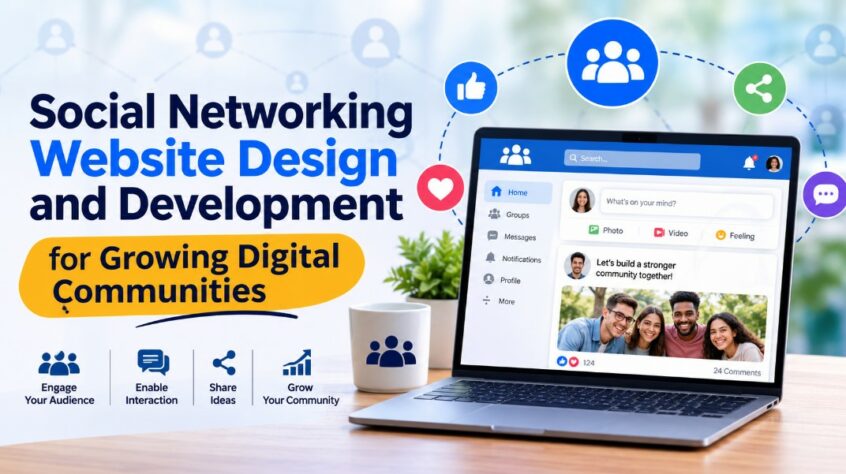
Digital communities give people a place to connect, share ideas, exchange information, and build meaningful relationships. From professional networks and interest-based groups to social platforms and online communities, these websites help people interact beyond geographical boundaries. A well-planned platform makes these interactions simple, enjoyable, and accessible.
Building a successful social platform requires more than attractive pages and user profiles. It needs thoughtful planning, useful features, smooth navigation, reliable performance, and a structure that can support a growing number of members. 8 Waves Creative understands the importance of combining user-focused design with practical development to create digital experiences that encourage participation and long-term engagement.
This guide explores the important elements of social platform planning, design, development, essential features, and ongoing improvements that help digital communities grow.
Understanding the Purpose of a Social Networking Platform
Before starting a project, it is important to understand why the platform needs to exist and who it will serve. Every online community has a different purpose, audience, and set of expectations. A platform designed for professionals will have different requirements from one created for hobby groups or local communities.
A clear purpose helps guide decisions about website structure, features, content, and user experience. It also makes it easier to build a platform that offers real value instead of simply copying existing social networks.
Important considerations include:
- Target Audience: Identify the people who will use the platform, their interests, online habits, and reasons for joining.
- Community Goals: Decide whether the website will support professional networking, knowledge sharing, entertainment, learning, or common interests.
- User Expectations: Understand what members expect from their experience, including communication tools, privacy settings, and content-sharing options.
- Platform Identity: Establish a clear purpose and visual identity that make the community easy to recognize.
- Long-Term Direction: Consider how the platform may expand as membership, content, and user activity increase.
A well-defined purpose creates a strong starting point for the entire project. It also helps prevent unnecessary features from making the website difficult to use.
Essential Elements of an Engaging Website Experience
The website experience plays a major role in attracting new members and encouraging existing users to return. Visitors should be able to understand the platform quickly, find relevant information, and interact without confusion.
Good design focuses on making every action straightforward. From account registration to browsing discussions, each part of the experience should feel connected and easy to follow.
Some important design elements include:
- Simple Navigation: Use clear menus and organized categories so members can find profiles, groups, discussions, and other important sections.
- Consistent Visual Design: Maintain consistent colors, fonts, icons, and layouts throughout the platform to create a familiar experience.
- Clear Calls to Action: Make important actions such as joining a group, creating an account, and sharing content easy to identify.
- Mobile-Friendly Layouts: Ensure that pages and interactive elements work properly on smartphones, tablets, and desktop devices.
- Accessible Interface: Use readable text, sufficient color contrast, descriptive labels, and keyboard-friendly navigation.
- Personalized Content: Help members discover discussions, groups, and updates that match their interests.
A clean interface reduces confusion and makes participation easier. When users can complete common actions without unnecessary steps, they are more likely to explore the platform and become active members.
Planning the Right Features for Community Interaction
Features should support the main purpose of the platform rather than make it unnecessarily complicated. A useful social networking website gives members enough tools to communicate, share content, and discover people with similar interests.
The development process should begin with essential functions and leave room for additional capabilities as the community grows. This approach makes the platform easier to manage and improves the overall experience.
Some useful features to consider include:
- User Registration and Login: Provide a straightforward account creation process with secure authentication and convenient login options.
- Member Profiles: Allow users to add profile pictures, short biographies, interests, professional details, and other relevant information.
- News Feeds: Display recent posts, updates, announcements, and discussions based on user activity and preferences.
- Groups and Communities: Let members create or join interest-based groups where they can exchange ideas and participate in discussions.
- Messaging Options: Support private conversations and group communication to make interaction more convenient.
- Content Sharing: Allow users to publish text, images, videos, links, and other relevant content.
- Search Functionality: Help members discover people, groups, topics, and discussions through useful search filters.
- Notifications: Keep users informed about messages, comments, replies, invitations, and other important activities.
It is also useful to introduce moderation tools that allow administrators to review reported content, manage discussions, and maintain community standards.
Creating a Strong Technical Foundation for Growth
A growing digital community needs a website that can handle increasing traffic, user activity, and content without affecting performance. The technical structure should support current requirements while allowing future improvements.
This is where thoughtful website development becomes important. The platform needs a reliable structure that connects its front-end experience, server-side functionality, databases, and third-party services.
Key technical considerations include:
- Scalable Architecture: Build the platform with a structure that can support additional users, content, and functionality as demand increases.
- Database Management: Organize member information, posts, messages, and other records so they can be stored and retrieved efficiently.
- Performance Optimization: Improve loading speed through optimized images, efficient code, caching, and suitable hosting resources.
- Secure Authentication: Use reliable login methods, password protection, and appropriate account verification measures.
- API Integration: Connect relevant external services when they provide useful functions such as email notifications, analytics, or payment processing.
- Backup and Recovery: Maintain appropriate backup procedures to help protect important platform information.
A strong technical foundation also makes maintenance easier. It allows the development team to introduce improvements without having to rebuild the entire platform whenever a new requirement appears.
The Role of Professional Design and Development Support
Creating a successful online community often involves several connected activities, including planning, interface design, technical development, testing, and ongoing maintenance. Having the right professionals involved can help bring these activities together.
A reliable web design agency can help translate a business idea into a clear website structure and user-focused visual experience. The right approach considers the platform’s audience, goals, and expected functionality before moving into the design stage.
A skilled website designer also plays an important role in making the platform visually appealing and easy to navigate. Their work helps create a consistent experience across different pages and devices.
Professional support can help with:
- Defining website requirements and organizing the overall project structure.
- Creating layouts that make important information and actions easy to find.
- Developing interactive elements that support communication and participation.
- Testing the website across different browsers, screen sizes, and devices.
- Identifying usability issues and making improvements before launch.
The goal is to create a platform that works smoothly for both new visitors and returning members. Good planning and collaboration can also reduce development challenges as the project moves forward.
For additional guidance on building a feature-rich platform, explore this resource on how to develop a social networking website with scalable features.
Protecting User Privacy and Building Platform Trust
People are more likely to participate in an online community when they feel their personal information and conversations are protected. Privacy and security should therefore be considered from the beginning rather than added as an afterthought.
Social platforms often handle personal details, profile information, messages, and user-generated content. These areas need suitable protection and clear rules that explain how information is collected, stored, and used.
Important practices include:
- Privacy Controls: Allow members to manage profile visibility and decide who can access their information.
- Secure Data Handling: Use encryption and appropriate security practices to protect sensitive information.
- Content Moderation: Provide reporting options and moderation processes to address spam, harassment, and inappropriate material.
- Account Protection: Introduce suitable authentication and account recovery methods to reduce unauthorized access.
- Clear Community Guidelines: Explain acceptable behavior and establish consistent rules for members.
- Regular Security Reviews: Check for vulnerabilities and update website components when necessary.
Building trust requires consistent attention. A platform that respects user privacy and responds to safety concerns creates a healthier environment for community participation.
Improving Engagement Through Personalization and Content Discovery
A community becomes more valuable when members can easily find information and conversations that interest them. Personalization helps make the experience more relevant while reducing the effort required to discover useful content.
Instead of showing every member the same information, a platform can organize content around selected interests, group memberships, and user activity. These features should remain transparent and give users suitable control over their experience.
Some effective engagement approaches include:
- Recommending relevant groups and discussions based on selected interests.
- Highlighting active conversations and useful community updates.
- Setting notification preferences that allow members to control communication frequency.
- Introducing discussion prompts, polls, and community challenges.
- Featuring valuable member contributions to encourage participation.
- Providing content categories that make browsing more organized.
Personalization should improve discovery without making users feel overwhelmed. A balanced approach helps members find relevant conversations while keeping the platform comfortable and easy to use.
Testing, Launching, and Maintaining the Platform
Launching a social networking website is an important milestone, but it is not the end of the development process. Testing and ongoing maintenance help ensure that the platform continues to work properly as more people join and use its features.
Before launch, the website should be checked from the perspective of different users, including first-time visitors, registered members, and administrators.
A practical launch and maintenance process should cover:
- Functionality Testing: Check registration, login, profiles, messaging, notifications, search, and content-sharing features.
- Device Testing: Review the website on different screen sizes and commonly used browsers.
- Performance Testing: Evaluate page loading, server response, and platform behavior during periods of increased activity.
- Security Testing: Review account protection, permissions, data handling, and moderation functionality.
- User Feedback: Collect feedback from early members to identify confusing features and improvement opportunities.
- Ongoing Updates: Fix technical issues, improve existing functions, and introduce useful features based on changing requirements.
Analytics can also help administrators understand how members use the platform. Metrics such as registrations, active users, returning visitors, group participation, and content interactions provide useful information for future decisions.
Build a Digital Community That Keeps People Connected
A successful social networking platform starts with a clear purpose and grows through a combination of thoughtful design, useful features, reliable technology, and a positive user experience. Every element, from account registration and content discovery to privacy controls and community management, contributes to how people interact with the platform.
Businesses and organizations should focus on creating an environment where members can connect easily, share valuable information, and participate confidently. Regular updates, performance improvements, and user feedback also help keep the experience relevant as community needs change.
With the right planning and professional support, 8 Waves Creative can help turn a digital community idea into a well-structured online experience. Contact us today to explore how a thoughtfully designed and developed platform can support your community goals and create meaningful connections.
Frequently Asked Questions
Can a social networking website be built for a specific industry?
Yes. A platform can be designed for a particular industry, profession, hobby, or interest group. For example, businesses can create networking communities for professionals, while educational organizations can build platforms for students, teachers, and alumni.
What legal requirements should a social networking website consider?
A platform should consider applicable privacy, data protection, accessibility, copyright, and online safety requirements. The exact obligations depend on its audience, location, services, and the type of information it collects. Legal guidance can help establish appropriate policies and procedures.
How can a new social networking platform attract its first users?
A new platform can attract early members through relevant online communities, partnerships, useful content, referral programs, and targeted promotional activities. Offering a clear reason to join and making the initial experience simple can also encourage people to invite others.
How can administrators manage spam and fake accounts?
Administrators can use email verification, suspicious activity monitoring, reporting tools, moderation controls, and suitable account restrictions. Regular reviews of unusual activity can help identify spam and protect genuine members.
Can artificial intelligence improve social networking websites?
Yes. Artificial intelligence can support content recommendations, spam detection, moderation assistance, search improvements, and personalized discovery. However, these tools should be implemented carefully, with appropriate human oversight, privacy safeguards, and clear platform policies.

As Senior Project Manager at 8Waves Creative, Sharon brings a strategic, organized approach to managing complex marketing initiatives. With extensive corporate marketing experience across a range of channels, she understands how the pieces fit together to create cohesive, effective campaigns. She keeps projects moving, teams aligned, and the details on track from start to finish.
Outside of work, Sharon enjoys spending time at the beach and cheering on her children from the sidelines.